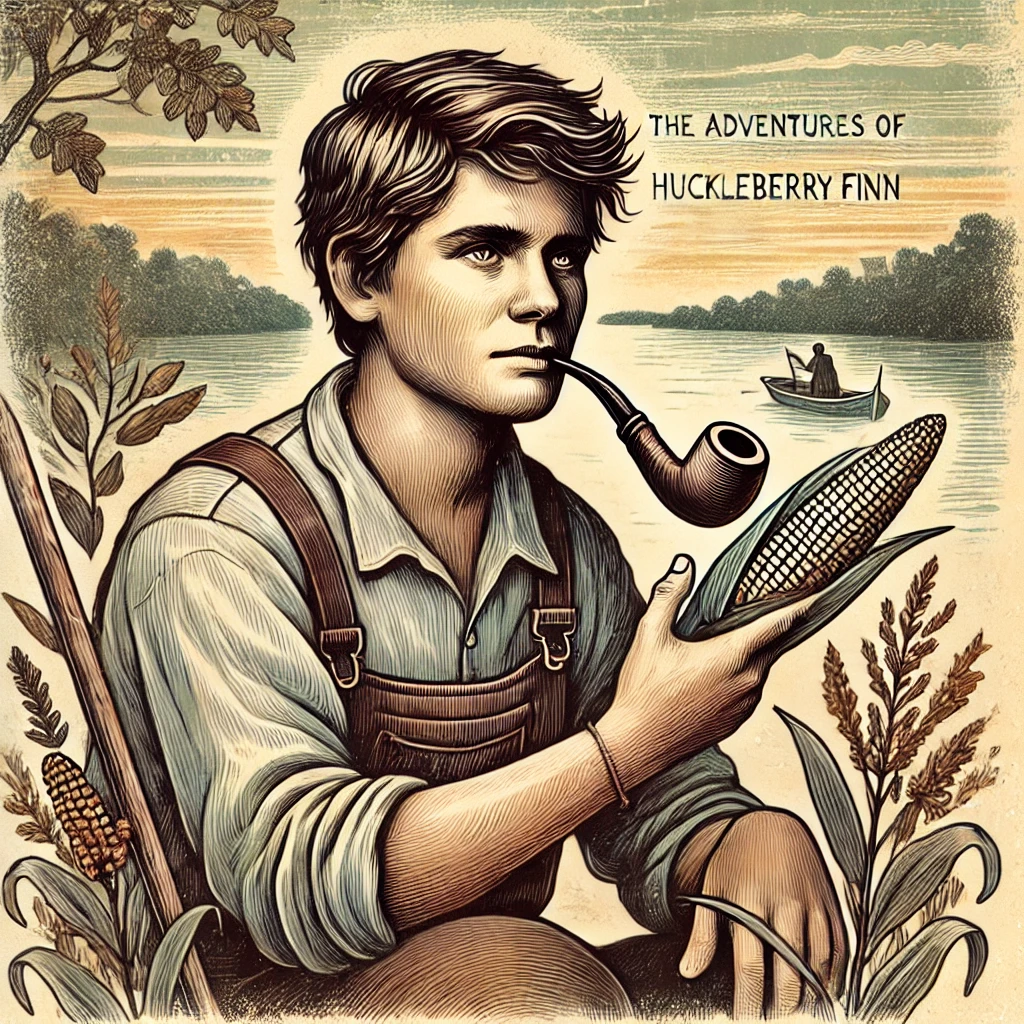
Introduction: Understanding the Significance of Huck Finn’s Corncob Pipe
When exploring The Adventures of Huckleberry Finn, one cannot overlook the symbolism behind Huck’s iconic corncob pipe. This seemingly simple object transcends its function as a smoking tool, evolving into a powerful symbol of freedom, rebellion, and Huck’s unique connection to nature. If you search for “google images huckleberry finn illustrations corncob [pipe,” you’ll find a rich array of artistic representations that not only capture Huck’s rugged spirit but also reflect the changing cultural attitudes over time.
Through these images, we gain a deeper understanding of how artists interpret Huck’s character and the symbolic importance of the corncob pipe. As Huck embarks on his journey down the Mississippi River, the pipe remains a constant companion, representing his desire for autonomy, his defiance of societal norms, and his deep connection to the natural world. This article explores the significance of Huck’s corncob pipe, its role in artistic portrayals, and how its symbolism has evolved through the years.
The Corncob Pipe as a Symbol of Rebellion and Freedom
In Mark Twain’s novel, Huck’s corncob pipe is much more than a tool; it’s an emblem of his rebellion against the constraints of society. As Huck navigates the river, the pipe symbolizes his resistance to the rules and expectations that others try to impose on him. By embracing the pipe, Huck makes a quiet but powerful statement about his desire for freedom and individuality.
When you search for “google images huckleberry finn illustrations corncob [pipe,” you’ll notice how illustrators have emphasized this aspect of Huck’s character. Whether the depiction is realistic or abstract, the pipe is consistently shown as a reflection of Huck’s wild, untamed spirit. The corncob pipe serves as a constant reminder that Huck is not just a boy on an adventure, but someone who is actively rejecting the societal norms of his time.
Historical Context of the Corncob Pipe in 19th Century America
To fully appreciate the significance of Huck’s corncob pipe, it’s essential to understand the historical context of the 19th century. The corncob pipe was a popular smoking device in rural America, often associated with simplicity, thrift, and a slower pace of life. For Huck, a boy who spends most of his time away from the confines of civilization, the pipe is a fitting accessory that reinforces his connection to the rustic, untamed American frontier.
The inclusion of the corncob pipe in Huck’s character can be seen as a reflection of the cultural values of the time. The pipe was not just a smoking tool; it symbolized self-reliance and resourcefulness. In this sense, Huck’s pipe aligns him with the rural South, where such symbols were deeply rooted in the daily lives of the people.
The Role of Illustrations in Defining Huck’s Character
Illustrations have always played a crucial role in literature, especially in works like The Adventures of Huckleberry Finn, where visual representation helps bring the characters to life. In the case of Huck, the corncob pipe is a key visual marker that defines his identity.
Through “google images huckleberry finn illustrations corncob [pipe,” you can trace the evolution of Huck’s depiction. Early illustrations by E.W. Kemble, who collaborated with Twain, often showed Huck in a playful, carefree manner, with the corncob pipe symbolizing his innocence and youthful rebellion. As time passed, illustrators like Norman Rockwell gave Huck a more sentimental and polished look, but the corncob pipe remained a constant symbol of his individuality.
The Psychological Interpretation of Huck and His Corncob Pipe
Beyond the physical realm, Huck’s relationship with his corncob pipe can be viewed through a psychological lens. The pipe represents Huck’s inner conflict and his search for identity. As a boy caught between childhood innocence and the complexities of adulthood, Huck uses the pipe as a way to assert his independence.
The act of smoking the pipe is a subtle form of defiance against the expectations placed on him. It’s a small but significant gesture that shows Huck’s desire for control over his own life. In this way, the corncob pipe becomes a tool for Huck’s self-expression, a way for him to stake claim over his own identity as he journeys toward self-discovery.
The Evolution of Huckleberry Finn Illustrations: From Innocence to Rebellion
Over the years, Huck has been portrayed in a variety of ways, and the corncob pipe has remained a consistent symbol in these depictions. The early illustrations, such as those by E.W. Kemble, show Huck as a carefree boy, with the pipe reflecting his playful, innocent nature. However, as societal views on smoking and rebellion evolved, the corncob pipe began to take on more layers of meaning.
As you browse through “google images huckleberry finn illustrations corncob [pipe,” you’ll notice how Huck’s pipe evolves along with the changing attitudes toward freedom and rebellion. In modern interpretations, artists have used the pipe not only to emphasize Huck’s rebelliousness but also to explore deeper themes of personal identity, freedom of choice, and the rejection of social expectations.
Key Illustrators Who Defined Huck Finn’s Visual Identity
The corncob pipe has been an essential part of Huck’s visual identity, thanks to the work of several key illustrators. Each of these artists has contributed their own interpretation of Huck, but the pipe remains a constant in their depictions.
- E.W. Kemble: As the first illustrator for The Adventures of Huckleberry Finn, Kemble’s black-and-white illustrations laid the foundation for Huck’s visual identity. His depictions of Huck with the corncob pipe emphasized the boy’s carefree and rebellious nature.
- Norman Rockwell: Rockwell brought a more polished and sentimental touch to Huck’s image. His illustrations, available on Google Images, presented Huck with the corncob pipe in a way that conveyed both innocence and a sense of nostalgia.
- Thomas Hart Benton: Benton’s illustrations of Huck were dynamic and full of movement, capturing the boy’s adventurous spirit. His portrayal of Huck with the corncob pipe highlighted the rebellious nature that defined Huck’s character.
These illustrators have shaped Huck’s image in a way that still resonates with audiences today. Thanks to platforms like Google Images, these works are easily accessible, allowing readers to explore the evolution of Huck’s character through the lens of his corncob pipe.
The Symbolism of the Corncob Pipe in Modern Adaptations
The corncob pipe continues to be a significant symbol in modern adaptations of The Adventures of Huckleberry Finn. Whether in film, television, or literature, the pipe is often used as a visual shorthand for Huck’s rebellious spirit and his rejection of societal norms. In contemporary adaptations, the pipe may take on new meanings, reflecting modern concerns about identity, freedom, and societal expectations.
For example, in some modern portrayals, the corncob pipe is used to emphasize Huck’s connection to his roots and the simplicity of rural life. In others, the pipe becomes a symbol of the character’s resistance to modern societal pressures. Regardless of the interpretation, the corncob pipe remains a key element of Huck’s character, representing his ongoing struggle for personal freedom and self-expression.
The Corncob Pipe as a Cultural Icon
Beyond The Adventures of Huckleberry Finn, Huck’s corncob pipe has become a cultural icon. It is a recognizable symbol of American literature and has appeared in numerous adaptations, movies, and products. The pipe continues to embody the ideals of freedom, rebellion, and individuality that Huck represents.
In this sense, the corncob pipe transcends its role in the novel and has become a broader cultural symbol. It has come to represent the timeless American values of independence and authenticity, qualities that Huck Finn exemplifies throughout his journey.
Conclusion: The Lasting Legacy of Huck Finn and His Corncob Pipe
The corncob pipe in The Adventures of Huckleberry Finn is much more than a simple object. It is a symbol of Huck’s spirit—his yearning for freedom, his defiance of societal expectations, and his connection to the natural world. Through the wide variety of artistic interpretations found on “google images huckleberry finn illustrations corncob [pipe,” we gain a deeper understanding of how Huck’s character has evolved over time and how the symbolism of the corncob pipe continues to resonate with readers and artists alike.
From early illustrations to modern adaptations, the corncob pipe remains a constant reminder of Huck’s independent journey, his struggle for personal freedom, and his rejection of the societal constraints placed upon him. Whether viewed as a symbol of rebellion, innocence, or self-reliance, Huck’s corncob pipe will forever be intertwined with his identity and his quest for autonomy.